Every early years setting has a folder of risk assessments for outings. Ratios are calculated, headcounts are planned, first aid kits are checked, and somebody has thought carefully about the pond, the road crossing and the car park. What is almost never assessed with the same rigour is the vehicle that gets everyone there, and yet the journey is statistically the most hazardous part of the entire trip.
This is not an intuitive conclusion, which is precisely why it gets missed. A well-supervised group of three-year-olds at a farm is in a controlled environment with adults watching them constantly. The same group travelling in a minibus on a dual carriageway is exposed to a category of risk that no amount of supervision inside the vehicle can mitigate. Practitioners tend to focus their planning attention on the destination because that is where the visible hazards are, while the vehicle is treated as neutral infrastructure rather than as something that needs checking.
Responsibility becomes blurred quickly, particularly where settings use a mix of arrangements. A hired minibus with a driver puts the obligation largely on the operator. A minibus owned by the setting puts it squarely on the setting. Staff using their own cars to transport children, which remains common in smaller settings and childminding arrangements, sits in the least clearly defined territory of all, and it is frequently the arrangement with the least oversight. Whatever the model, somebody should be able to say when the vehicle was last checked and by whom, and in a surprising number of settings nobody can.
The practical list is short. Tread depth and general tyre condition, pressures, lights, wipers, washer fluid, and a look for anything obviously wrong such as fluid on the ground. Tread and pressure deserve particular attention because they degrade gradually and invisibly, and because a fully loaded vehicle behaves differently from an empty one. Independent retailers, Tyres.co.uk among them, publish guidance on checking tread and pressure that is straightforward enough to hand to a member of staff who has never been asked to do it before. The point is not to turn practitioners into mechanics. It is to make the check a named task with a named owner rather than an assumption.
Anyone who drives a minibus occasionally rather than routinely tends to underestimate this. A vehicle carrying a dozen children and several adults, plus equipment, is considerably heavier than the same vehicle on a test drive, and that additional weight affects braking distance, cornering and tyre pressure requirements. Many vehicles specify a higher pressure for laden use, and it is printed in the handbook or inside the fuel filler flap. Setting the pressures for an empty vehicle and then filling it is a common oversight, and in wet conditions it changes how the vehicle stops.
Tyre requirements in the UK are set in law rather than left to judgement, and the rules on tyre safety and the law set out the minimum tread depth, the condition requirements and the penalties that apply per tyre. Two things are worth drawing out of that for anyone responsible for a setting’s transport. Penalties apply to each individual tyre rather than to the vehicle as a whole, so a vehicle with several worn tyres carries multiplied consequences. And the legal minimum is a threshold below which a tyre becomes an offence, not a level at which it still performs well, which matters when the vehicle is carrying children in wet weather.
Settings already run robust processes for almost everything else, so the fix is administrative rather than cultural. Add a vehicle section to the existing outing risk assessment template with specific items rather than a general tick box. Where staff use their own cars, ask for confirmation of MOT, insurance covering business use and a recent check, and keep a record. Nominate one person responsible for the minibus rather than leaving it to whoever is driving that day. None of this is onerous, and it converts an assumption into a documented process, which is also the version that stands up to inspection.
There is a secondary benefit worth mentioning to a practitioner audience. Children in the early years are absorbing adult behaviour constantly, and a driver who walks around the vehicle before setting off is modelling something more useful than any road safety poster. Settings that involve children in noticing the checks, counting the tyres, spotting the lights turn an administrative task into an incidental learning opportunity. It costs nothing and it plants the idea that vehicles are things adults look after deliberately rather than simply get into.
The recurring theme in transport incidents involving organised groups is not recklessness. It is diffusion of responsibility, where everyone assumed somebody else had checked. Naming the person, writing down the check and keeping the record is the entire intervention, and it takes less time than the ratios calculation that every setting already does without complaint. Outings matter enormously to early years provision and nobody wants to reduce them. Making sure the journey gets the same attention as the destination is how they stay straightforward.
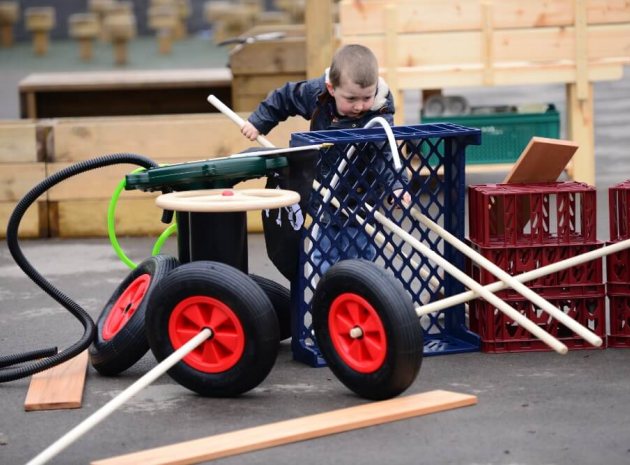
The Outdoor Curriculum in all its Glory by Early Excellence
Ace-Practitioner

 follow us @TeachEarlyYrs